ยาโคลิสติน (Colistin หรือ Polymyxin E)
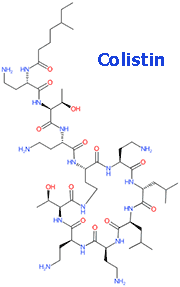
Colistin เป็นยาปฏิชีวนะที่ถูกค้นพบครั้งแรกในช่วงปลายทศวรรษที่ 1940 จากเชื้อ Bacillus polymyxa จัดเป็นยาปฏิชีวนะรุ่นเก่าที่ถูกนำมาใช้อย่างแพร่หลายในอดีต ก่อนจะถูกลดบทบาทลงเนื่องจากปัญหาพิษต่อไตและระบบประสาท
อย่างไรก็ตาม ในยุคปัจจุบันที่เกิดปัญหาเชื้อดื้อยาหลายขนาน โดยเฉพาะเชื้อ Gram-negative เช่น Acinetobacter baumannii, Pseudomonas aeruginosa และ Klebsiella pneumoniae ทำให้ Colistin ถูกนำกลับมาใช้อีกครั้งในฐานะ "last-line antibiotic"
Colistin อยู่ในกลุ่ม Polymyxin antibiotics เป็น cyclic polypeptide antibiotic ที่มีโครงสร้าง amphipathic ทำให้สามารถจับกับเยื่อหุ้มเซลล์แบคทีเรียได้โดยตรง
รูปแบบยาที่ใช้ทางคลินิก ได้แก่
- Colistimethate sodium (CMS) – รูปแบบ prodrug สำหรับฉีด (IV/IM) และ nebulization
- Colistin base – ใช้ในบางประเทศในรูป oral/topical
กลไกการออกฤทธิ์และการดื้อยา
Colistin ออกฤทธิ์โดยการ จับกับ lipopolysaccharide (LPS) บน outer membrane ของเชื้อ Gram-negative ผ่าน electrostatic interaction กับ lipid A
- แทนที่ Ca²⁺ และ Mg²⁺ ที่ช่วยคงโครงสร้างเยื่อหุ้มเซลล์
- ทำให้ membrane permeability เพิ่มขึ้น
- เกิด leakage ของ intracellular contents
- นำไปสู่ cell lysis และ cell death
ลักษณะการออกฤทธิ์เป็นแบบ concentration-dependent bactericidal
กลไกการดื้อยา
- การดัดแปลง lipid A → ลดประจุลบของ LPS ทำให้ colistin จับไม่ได้
- การกลายพันธุ์ของยีน chromosomal เช่น pmrA/pmrB, phoP/phoQ
- plasmid-mediated resistance โดยยีน mcr-1 ถึง mcr-10
- heteroresistance → ประชากรเชื้อบางส่วนดื้อยาใน isolate เดียวกัน
การใช้ยาที่เหมาะสม
ข้อบ่งใช้หลัก
- การติดเชื้อจาก MDR/XDR Gram-negative bacteria
- Carbapenem-resistant Enterobacterales (CRE)
- MDR Acinetobacter baumannii
- MDR Pseudomonas aeruginosa
การติดเชื้อทางคลินิกที่ใช้ Colistin
- Sepsis / septic shock
- Hospital-acquired pneumonia (HAP)
- Ventilator-associated pneumonia (VAP)
- Complicated UTI
- Bloodstream infection
- CNS infection (intrathecal/intraventricular use เฉพาะกรณีจำเป็น)
หลักการสำคัญ: Colistin ไม่ควรใช้เป็น monotherapy ในการติดเชื้อรุนแรง ควรใช้แบบ combination therapy (เช่น ร่วมกับ carbapenem, tigecycline, fosfomycin, rifampicin) เพื่อเพิ่ม efficacy และลด resistance
ผลข้างเคียง พิษของยา และข้อควรระวัง
พิษของยา (Toxicity)
- Nephrotoxicity: acute tubular necrosis, reversible AKI
- Neurotoxicity: paresthesia, dizziness, neuromuscular blockade, respiratory paralysis
- Respiratory: bronchospasm (nebulized form)
ข้อควรระวัง
- ผู้ป่วยไตวายต้องปรับขนาดยาอย่างเคร่งครัด
- ควร monitor renal function อย่างใกล้ชิด
- หลีกเลี่ยงร่วมกับยา nephrotoxic อื่น
- ระวัง neuromuscular blockade ในผู้ป่วยใช้ muscle relaxant
ปฏิกิริยาระหว่างยา (Drug interactions)
- Aminoglycosides, Vancomycin, Amphotericin B: เพิ่ม nephrotoxicity
- Loop diuretics: เพิ่ม renal toxicity
- Neuromuscular blockers: เพิ่มความเสี่ยง respiratory paralysis
- Sedatives/Opioids: additive respiratory depression
สรุป
Colistin เป็นยาปฏิชีวนะที่มีบทบาทเชิงยุทธศาสตร์ในยุคเชื้อดื้อยา โดยทำหน้าที่เป็นยาด่านสุดท้าย (last-line therapy) สำหรับการติดเชื้อ Gram-negative รุนแรงจาก MDR/XDR organisms แม้ว่ายาจะมีประสิทธิภาพสูง แต่มีข้อจำกัดด้านความเป็นพิษต่อไตและระบบประสาท การใช้ Colistin จึงต้องอยู่ภายใต้หลักการ antimicrobial stewardship อย่างเคร่งครัด โดยต้องคำนึงถึงข้อบ่งใช้ที่เหมาะสม การใช้ร่วมยา (combination therapy) การติดตามความปลอดภัย และการป้องกันการเกิด resistance เพื่อให้การใช้ยาเกิดประโยชน์สูงสุดต่อผู้ป่วยและระบบสาธารณสุขในระยะยาว